Bedding care
Vispring Protector Care: Keeping Natural Bedding Fresh and Breathable
A mattress protector does its quiet work between the bed and the world: catching perspiration, softening the first touch of the sheets, and helping keep the mattress beneath in better condition. When cotton and wool do the work, good care is less about elaborate rituals than about respecting the materials—and reading the instructions before reaching for the washing machine.
The appeal of natural bedding often lies in what it does not announce. Cotton feels familiar rather than engineered; wool offers warmth without the sealed-in sensation some sleepers dislike. A well-made protector brings these materials together in a layer that is easy to overlook when everything is going well. It rests beneath the fitted sheet, stays mostly out of sight, and takes on a share of the ordinary work of sleeping: moisture, body oils, lint, and the occasional spill.
That modest role deserves a little attention. A protector is not a substitute for a mattress, nor a force field against every mishap. It is a washable or otherwise maintainable barrier designed to reduce everyday wear on the bedding below. Its effectiveness depends on three things that are easy to underestimate: the materials, the fit, and the way it is cleaned. Treat those details well and the bed is more likely to remain comfortable, breathable, and orderly over time.
The Vispring Lux Skirted Mattress Protector is described as a quilted layer with a cotton outer and British wool filling, secured by a fitted skirt. Its care guidance calls for a gentle cold wash with a natural detergent, without bleach or fabric softener, followed by line drying or low-heat tumble drying. These are product-specific instructions, not a universal recipe for every wool-filled protector. The label and the maker’s current guidance should always have the final word.
What a protector can—and cannot—do
Sleep is an intimate activity, but bedding is not immune to the ordinary chemistry of a night. The body releases moisture; skin and hair leave oils; dust settles. A protector intercepts some of that contact before it reaches the mattress. A skirted design also helps hold the layer in place, so the surface under the sheet is less likely to bunch or creep toward the foot of the bed.
“Protect” can sound absolute, and it is worth resisting that implication. A breathable cotton-and-wool layer is not necessarily waterproof. It may help manage small amounts of moisture and everyday wear, but it should not be assumed to contain a major spill or provide a medical barrier. Anyone needing liquid-proof protection should check the specific product’s construction and claims rather than infer performance from the word “protector.”
Nor does a protector make a mattress immune to ageing. It cannot correct a sagging support core or restore a worn surface. What it can do is take on some of the routine soil and friction that would otherwise land directly on the mattress. That modest division of labor is useful enough: the protector is the accessible layer; the mattress is the more difficult one to clean and replace.
A natural protector also changes the feel of a bed, if subtly. Quilting can add a light cushion, while wool gives the layer a little body. The result depends on its thickness, construction, and the mattress beneath it. A protector should not be expected to transform an unsuitable mattress, but it can make the surface feel more composed and help the sheet lie smoothly.
Cotton and wool: a partnership in comfort
Cotton is often chosen for the part of bedding that touches the sleeper or surrounds the filling. It is familiar, washable in many constructions, and comfortable against the skin. In a quilted protector, the outer fabric helps contain the filling and forms the immediate surface of the layer. How it performs depends not just on the fiber but on the weave, finish, stitching, and care it receives.
Wool has a different character. Its fibers can take up water vapor and release it again as conditions change, which is one reason wool appears in bedding intended to feel less clammy. This does not mean wool can keep every sleeper at a perfect temperature, or that it makes a bed “self-regulating” in a magical sense. It means the material has properties that may contribute to a more comfortable microclimate, in combination with the rest of the bedding and the room.
Natural fibers are not automatically carefree. Wool can be sensitive to agitation, high temperatures, and unsuitable cleaning products. Cotton can shrink or lose some of its smoothness if washed harshly. Stitching and quilting can also affect how a layer handles repeated laundering. The practical lesson is not to treat natural materials as fragile curiosities; it is to avoid assuming that one wash routine fits every item.
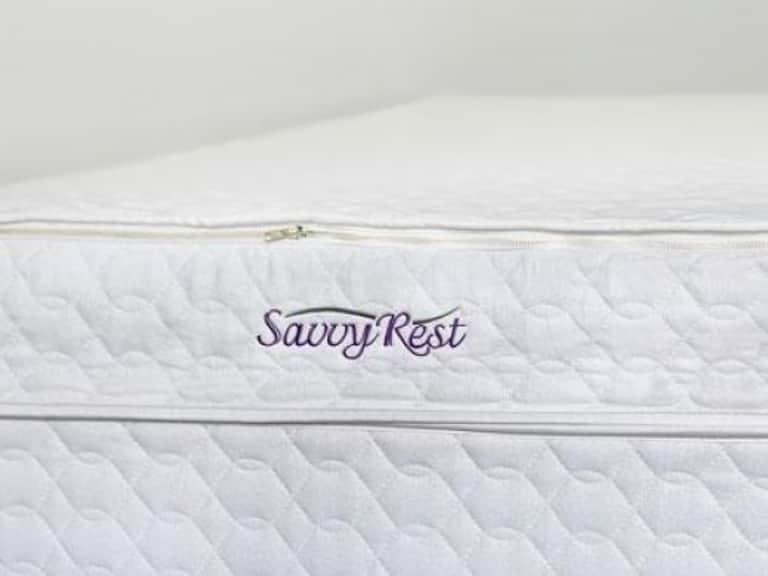
A separate wool pad illustrates the broader care principle. The Savvy Rest Wool Mattress Pad, for example, is described as hand-washable in mild detergent and intended to be line-dried. That guidance differs from the Vispring protector’s stated gentle machine-wash option. Both contain wool, but construction and manufacturer instructions matter more than a broad category label.
Fit is part of the care
A protector that will not stay put is not merely irritating; it can undermine the smoothness of the sleep surface and make the bedding harder to manage. Before buying or fitting one, check the mattress dimensions and depth. A skirt must have enough reach to sit securely around the mattress without being stretched to its limit. Toppers, thick mattress designs, and adjustable foundations can all change what “fits” means in practice.
With a skirted protector, pull the corners into place and smooth the quilted surface before making the bed. The aim is secure and even—not taut to the point of straining seams or elastic. A layer that is too small may ride up; one that is excessively loose may wrinkle beneath the sheet. A properly fitted protector is less likely to shift during the night and easier to straighten during routine bed-making.
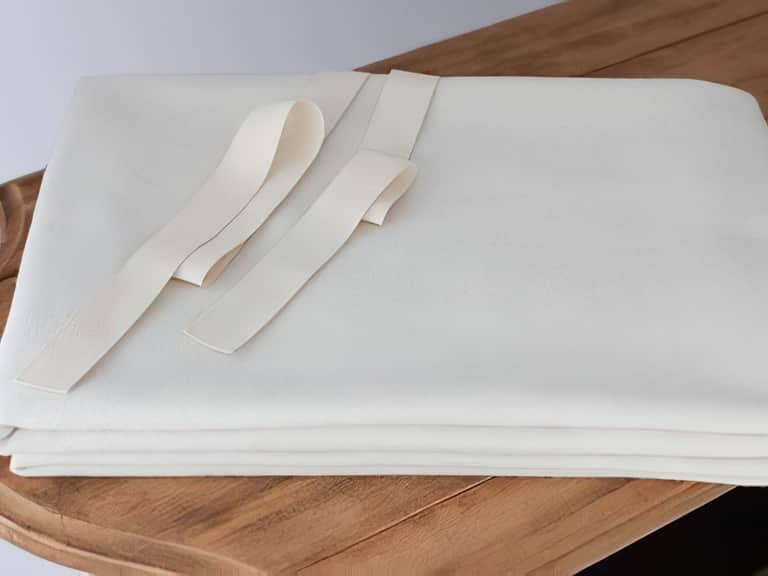
Some designs use elastic all around; others rely on corner bands or ties. These methods are not interchangeable in every situation. Follow the product’s fitting instructions, and avoid improvising with pins or clips that could damage the fabric or create a hard point under the sheet. When a protector shifts repeatedly despite careful fitting, check mattress depth and dimensions before blaming the materials.
It is also sensible to consider the layers above it. Deep fitted sheets may be needed when a protector, topper, and mattress are used together. If the sheet is pulled so tightly that it compresses or dislodges the protector, the bed can become a small exercise in textile engineering. Measure the combined depth and choose sheets accordingly.
A careful washing routine
Before laundering, read the care label and any current product instructions. Confirm the recommended water temperature, detergent, wash cycle, and drying method. If the guidance is unclear, contact the manufacturer rather than guessing. Care instructions can change between product versions, and a general recommendation for wool or cotton should not override the directions for a particular quilted item.
For the Vispring Lux protector, the supplied guidance recommends washing monthly on a gentle cycle in cold water with like colors and a natural detergent. It advises against bleach, fabric softeners, and dryer sheets, and recommends line drying or tumble drying on low, removing the protector promptly. The monthly interval is a manufacturer recommendation for this item, not a rule that every household must apply to every protector. Actual needs vary with climate, use, allergies, spills, and personal preference.
Start by checking the care label and the condition of the protector. Close zippers if present, secure loose fastenings, and avoid washing the item with heavy garments, abrasive objects, or items with hooks that could catch the quilting. A washer needs enough room for the protector to move through the water without being packed tightly. If it is too large for a household machine, a suitable larger-capacity machine or professional advice may be safer than forcing it into a cramped drum.
Use the stated amount of detergent, or less if the product instructions advise it. More soap does not necessarily mean more cleanliness; residue can remain in the filling or fabric and may affect the feel of the surface. Avoid bleach and fabric softener when the manufacturer says to do so. These products can affect fibers or finishes, and softeners may leave a coating that changes how cotton absorbs moisture.
After washing, support the protector as you remove it. Wet quilting can be heavier than it appears, and pulling at one edge may strain seams or distort the shape. Follow the recommended drying method and make sure the layer is thoroughly dry before putting it back on the mattress. Damp bedding tucked under sheets can hold moisture where air circulation is limited. If using a tumble dryer is permitted, keep to the specified low heat and remove the item promptly. If line drying, spread it evenly and allow time for the filling to dry throughout.
Freshness between washes
Frequent washing is not automatically better care. Laundering too often, or with too much heat and agitation, can wear fabric and quilting. Between washes, airing the bed can help disperse ordinary humidity: pull back the covers for a while, allow the room to ventilate, and avoid making the bed tightly over a warm, damp surface. This is simple housekeeping, not a cure-all, but it gives bedding an opportunity to dry.
For a small spot, consult the care instructions before applying a cleaner. Blot rather than rub, and test any permitted treatment on an inconspicuous area if the manufacturer recommends it. Do not soak a wool-filled protector or apply a stain remover simply because it worked on a cotton shirt. Liquids and cleaning agents can travel through quilted layers, and aggressive scrubbing may disturb the fabric or filling.
Keep food and drinks away from the bed when practical, and use a separate, washable layer if a particular situation calls for additional protection. If a spill occurs, act promptly: lift off the sheet, blot excess liquid with a clean cloth, and follow the protector’s instructions. Avoid saturating the mattress beneath. If liquid has reached the mattress, consult its own care guidance as well; cleaning one layer does not address another.
Rotation, where appropriate, belongs to mattress care rather than protector care. Some mattresses are designed to be rotated; others should not be flipped or turned. Check the mattress maker’s instructions. A protector itself generally does not need a rotation schedule, though it can be smoothed and repositioned as part of changing the sheets.
Common mistakes to avoid
- Assuming “natural” means washable in any way. Fiber content does not tell the whole story; quilting, stitching, and finishing affect care.
- Using high heat without checking. Heat may shrink cotton or affect wool and the protector’s shape. Follow the item’s own drying guidance.
- Adding softener for a softer feel. If the maker advises against it, skip it; residues can change the fabric’s surface and moisture behavior.
- Forcing an oversized protector into a small washer. Crowding can prevent a thorough rinse and place strain on seams.
- Putting it back while damp. Allow the entire quilted layer to dry before covering it with sheets.
- Expecting a breathable protector to be waterproof. Confirm the product’s specific performance claims if liquid protection is essential.
Another common misstep is to treat all signs of wear as a washing problem. If elastic has lost its grip, seams are opening, or the filling has shifted, cleaning may not restore the protector’s function. Inspect it when changing the bedding. A layer that no longer lies flat or stays secure may need repair or replacement, depending on its condition and the manufacturer’s recommendations.
When to wash, and when to replace
There is no single interval that suits every bed. A household may wash a protector more often after a spill or during a humid season; another may follow the maker’s suggested schedule under ordinary use. People with allergies, sensitive skin, pets, or particular health needs may prefer a different routine. When in doubt, balance cleanliness with the material’s care limits rather than treating the calendar as an absolute.
Replacement is worth considering when the protector has persistent staining or odor that remains after suitable cleaning, when the fabric is torn, or when the skirt no longer holds it in place. A change in feel can also be a clue: lumpy filling, flattened quilting, or a roughened surface may indicate that the layer has lost some of its usefulness. These are practical observations, not a precise lifespan guarantee. Durability depends on construction, frequency of washing, and the conditions in which the protector is used.
Keep the care instructions somewhere accessible—on a product page, in a household note, or with other bedding information. It is an unglamorous form of good stewardship. When laundry day arrives, there is no need to reconstruct the manufacturer’s advice from memory or apply the rules meant for a different item.
The quieter luxury of maintenance
Luxury in bedding is often imagined as a matter of abundance: deeper quilting, finer fabrics, more elaborate finishing. But there is another sort of luxury in a bed that feels calm and dependable, in a protector that stays where it belongs and a surface that remains clean without demanding constant attention. The materials matter, but so does the modest discipline of caring for them sensibly.
For natural bedding, that discipline is neither complicated nor dramatic. Use the right fit. Give the bed a little air. Wash according to the actual product instructions, not assumptions about cotton or wool. Avoid harsh products where the maker says to avoid them, and let the protector dry fully before it returns to the mattress. These small decisions preserve comfort while helping the layer do the work for which it was made.
A cotton-and-wool protector cannot promise a perfect night, and it need not. Its value is more ordinary, and more credible: a breathable layer between sleeper and mattress, a smoother bed when it fits well, and a washable line of defense against the accumulation of everyday use. With careful maintenance, it can remain a useful part of the sleep system rather than an invisible afterthought.
A practical care checklist
- Check the product label before the first wash and whenever instructions are uncertain.
- Confirm that the protector fits the mattress depth and sits smoothly beneath the sheet.
- Use the recommended temperature, cycle, and detergent; avoid prohibited bleach or softener.
- Dry thoroughly using only an approved method and heat setting.
- Air the bed between washes and address spills promptly without saturating the mattress.
- Inspect seams, quilting, and the skirt periodically for signs that the protector needs repair or replacement.